Platforms, Algorithms, and Creators: Why Independent Blogs Still Matter
A reflection on platform power, algorithmic distribution, creator assets, and why independent blogs still matter when most attention comes from social platforms.
Over the past few years, I wrote about several topics that looked unrelated: the rise and fall of big internet companies, algorithmic content distribution, WeChat red packet covers, and why internet startups feel harder than before.
Taken together, they point to the same issue: internet entry points are increasingly concentrated, and content visibility depends more and more on platform rules and algorithmic distribution. Creators may appear to own accounts, followers, and page views, but very little of that is fully under their control.
Platforms are still valuable. Without platforms, most content would never get a first audience. The problem is that platforms are good for exposure, but fragile as the only place where a creator stores content, relationships, and data.
Chinese version of this article

Followers Are Not Ownership
Most content platforms show a follower count, but a follower count is not the same as reliable reach.
In the earlier internet, following an account looked more like subscribing. If a reader followed someone, the next update had a relatively stable chance of showing up. Once recommendation algorithms became the main entry point, the follow relationship still existed, but it no longer guaranteed distribution priority.
This is not specific to one platform. It is the general direction of content platforms. A platform optimizes for retention, interaction, ad value, ecosystem safety, and compliance. It does not optimize for the long-term asset ownership of one creator.
If an algorithm decides that unfamiliar content keeps users engaged for longer, followed content may be weakened. If the platform wants to push a new feature, traffic will move toward that feature. If moderation becomes stricter, creators have to adapt.
So a more accurate description is this: having followers on a platform means the platform temporarily allows an account to reach a group of users with some probability. That probability changes, and the reasons are usually not fully transparent.
This does not mean platforms are malicious. A platform has to manage massive content supply, user experience, business goals, and legal risk. It will naturally keep distribution control in its own hands. Creators need to understand that follower count is a platform metric, not a complete user relationship.
Big Companies Show How Entry Points Move
When I entered university in 2013, the default reference point for Chinese internet companies was still BAT: Baidu, Alibaba, and Tencent. A common summary at the time was that Baidu was strong in technology, Alibaba in operations, and Tencent in product.
More than a decade later, mobile internet and recommendation algorithms changed many assumptions. Search no longer dominates the way it did on desktop. E-commerce competition is not only about operations. Social and content consumption have been reshaped by short video. Companies such as Douyin and Pinduoduo are often described as stronger in algorithms, traffic organization, and matching supply with demand.
The point is not to predict which company will win. The more important lesson is that internet entry points move.
When entry points move, everyone attached to the old entry point has to adapt. Merchants adapt to new traffic costs. Developers adapt to new platform rules. Creators adapt to new content formats.
In one period, long-tail search traffic may work. In another period, titles, thumbnails, completion rate, and engagement may matter more. A platform’s power comes from its ability to redefine what becomes visible. It can encourage short video, livestreaming, image-heavy posts, or a new feature it wants to grow.
If a creator binds all work to one platform entry point, the uncertainty of that entry point becomes part of the creator’s life.
Red Packet Covers: Incentives Are Not Assets
In 2023, when AI image generation became popular, I made a WeChat Official Account and a Mini Program. The algorithm gave a few posts a wave of traffic, and by the 2024 Spring Festival the account had more than 1,500 followers. WeChat gave the account 1,200 custom red packet cover quotas. At the time, it felt fresh and interesting.
Before the 2025 Spring Festival, WeChat gave the account 6,000 quotas. In the end, I barely used them.
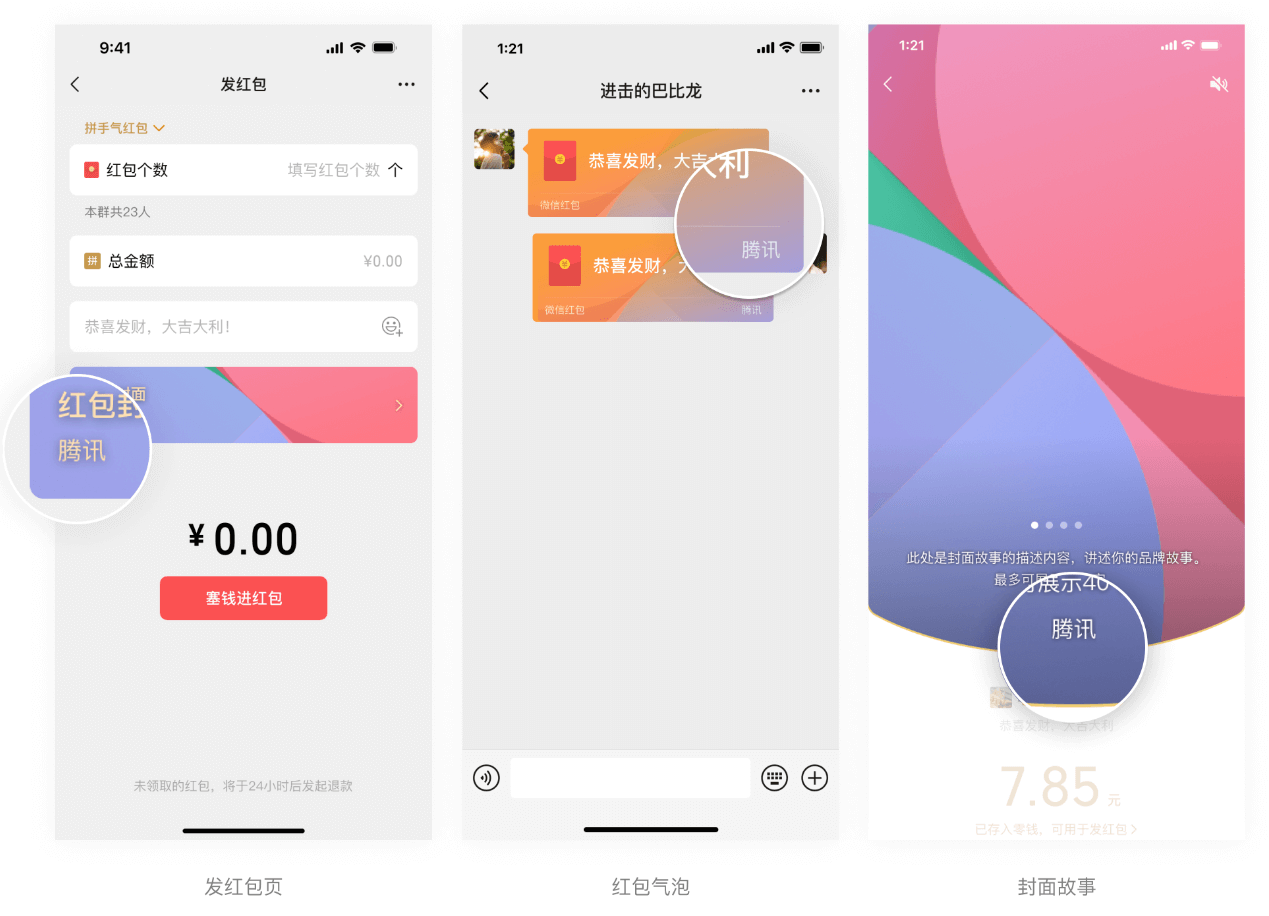
This is a useful case for understanding the relationship between platforms and creators.
The red packet cover is a clever product. A user sees the cover when sending or receiving money. The creator gets brand exposure. The platform connects content, social behavior, and payment scenarios. For creators, it looks like both a traffic reward and a status signal.
But it is not a creator asset.
First, the quota comes from platform rules. How many quotas a creator gets, when they arrive, and what the threshold is can all change.
Second, the content must pass platform review. Covers involve copyright, similarity, source material, copywriting rules, and human judgment. Even if an image is generated by AI, it can still fail review if it looks too close to existing IP or someone else’s work.
Third, conversion is unstable. In 2024, I made two covers. One used generic Spring Festival imagery. The other matched the topic that previously brought traffic to the account. The second one performed better because it connected with existing reader interest. Even so, very few people ultimately followed the account through the red packet cover.
By 2025, the atmosphere, review process, and cost-benefit calculation had changed. The same effort no longer felt worthwhile.
That is the nature of platform incentives. They can be useful in the short term, but creators should not treat them as reusable assets. What is worth keeping is the understanding of audience interest, content process, production workflow, and lessons that can move across platforms.
Startup Winter and Creator Winter
Internet startups became harder for reasons that resemble the creator economy.
The earlier internet had more low-hanging fruit. Users were growing quickly, platform rules were simpler, and a product that solved a real problem could sometimes grow naturally. Today, the internet is mature. User attention is split across many apps, acquisition costs are higher, and large companies can copy or pressure new directions more easily.
Content creation follows a similar pattern. In earlier stages, content supply was lower, so consistent publishing had a better chance of being discovered. Later, the number of creators grew, feeds became crowded, and simply “keep publishing” stopped being enough.
Titles, covers, pacing, topic choice, account weight, interaction rate, timing, and platform priorities all affect the result.
This can make people think content quality no longer matters. That is the wrong conclusion. Quality still matters, but quality does not automatically create traffic. It is a threshold, not a guarantee.
A startup cannot only believe that “a good product will naturally grow.” A creator cannot only believe that “good content will naturally find readers.” Growth has become its own problem, and platforms control many of the most important entry points.
What an Independent Blog Really Preserves
An independent blog does not magically create traffic. In many cases, it grows much more slowly than a platform account. There is no recommendation feed, no trending list, no platform campaign, and rarely a sudden viral moment.
But an independent blog preserves things that platforms rarely provide.
Content control. You decide how articles are structured, how long they remain available, whether they can be updated, whether they include links, code, or long-form context. Platforms encourage the formats that work for platform consumption. A blog can serve long-term expression.
Stable URLs. An article link can exist for years. Citations, search engine indexing, bookmarks, and references do not depend on whether a platform still wants to distribute that post.
Complete context. Platform content often optimizes for one post’s immediate performance. A blog is better for series, project reviews, long-term opinions, and traceable thinking.
Data and migration. Markdown files, images, code, domains, RSS, and sitemaps can be managed by the owner. Even if the framework, server, or deployment method changes later, the content can move.
Search and long tail. Platform content often has a short lifecycle. A blog is better for search-driven discovery. Many engineering problems, tool experiences, and personal reviews may not be algorithm-friendly, but they are useful when someone searches for them at the right time.
These values are not flashy, but they are solid. Platforms provide traffic opportunities. An independent blog preserves content assets.
Use Platforms, But Change Their Role
An independent blog is not a reason to leave platforms completely. Without platforms, many posts will never be discovered for the first time.
A more realistic strategy is to treat platforms as distribution channels and the blog as the content base.
The workflow can be simple:
- Publish important articles on the blog as the complete version.
- Turn one point, one case, or one conclusion into a platform-native post.
- Rewrite for each platform instead of forcing the same text everywhere.
- Point readers back to the long-term URL whenever the platform allows it.
- Use RSS, email, domain names, and search so readers can find you again outside the feed.
The point is not to be anti-platform. The point is to avoid putting all accumulated value inside a platform container. Platforms are good at expanding reach. Blogs are good at preserving judgment. A platform is a public square. A blog is a study. You meet people in the square, but you keep your work in the study.
A Reminder for Personal Writing
An independent blog is not valuable just because it exists. Its value depends on whether the content is worth preserving.
For me, the most valuable posts are usually not generic tutorials. They are reviews with real context:
- Why this solution was chosen over another.
- What actually went wrong.
- What the decision depended on at the time.
- Which assumptions still hold up later.
- What I would do differently today.
This kind of writing may not spread as easily as short-form platform content, but it remains searchable, referenceable, and reorganizable years later. It may not create high immediate traffic, but it becomes part of a public knowledge archive.
That is the biggest difference between a platform account and an independent blog. A platform account shows stage-by-stage performance. A blog records a long-term trajectory.
Conclusion
On platforms, creators get exposure opportunities, not complete user relationships. They get follower numbers, not stable reach. They get campaign incentives, not portable assets.
Platforms still matter. Algorithmic recommendations, social relationships, trending events, and ecosystem features can all help content reach more people. But creators should admit that these powers belong to the platform, not to the account itself.
The purpose of an independent blog is to keep a controllable content base outside the platform. It does not replace platform traffic, and it does not promise fast growth. It gives long-term content a stable address, gives personal judgment continuous context, and lets readers find you again without waiting for an algorithm.
Use platforms. Study algorithms. But invest in what can still remain outside them.
Loading discussion...
Discussion failed to load. Reload